
Heavy Duty Flags for High Wind: Buyer's Guide
Table of Contents
Last Updated: September 13, 2026
What Makes a Flag Heavy Duty for High Wind
Heavy duty flags for high wind are built from dense, tightly woven fabric with reinforced stitching at every stress point, so they hold their shape and color when sustained winds try to tear them apart. The difference between a flag that survives a storm season and one that shreds in weeks comes down to three things: fabric weight, stitch quality, and how the flag attaches to the pole.
Most flag failures don't start at the center. They start at the fly end, the loose edge that whips back and forth with every gust.
Wind Speed Thresholds: When a Standard Flag Fails
Standard printed flags typically begin to fray at sustained winds around 15 to 20 mph (Estimating Wind). Once gusts push past 25 mph, the constant flexing at the fly end starts breaking down lightweight fabric and single-stitched hems. Above 35 mph, most economy flags show visible damage within hours. Heavy duty construction pushes that failure point much higher, which matters if your pole sits on open ground where wind has nothing to slow it down.
The practical takeaway: match your flag's construction to the wind your site actually sees, not the average for your area. A flag rated for occasional gusts will not survive a coastal exposure or an open field.
2-Ply Polyester vs Nylon Flags for Wind: Which Lasts Longer
Polyester wins for high-wind sites, and it isn't close. A 2-ply spun woven polyester flag uses two interwoven layers of yarn, which gives it a canvas-like density that resists tearing and holds dye far longer than a single-ply print. Nylon is lighter and flies in the gentlest breeze, which is why it looks impressive on a calm day. That same lightness is its weakness: nylon stretches, fades faster under UV, and takes more punishment in sustained wind.
Here's the trade-off most buyers never hear. If your site gets steady light breezes and you want maximum flutter, nylon is the better display fabric. If your site gets real wind, polyester's weight and tensile strength keep the flag intact.
Factor | Nylon | |
Wind performance | Excellent in sustained wind | Best in light breeze |
UV fade resistance | High | Moderate |
Moisture wicking | Good | Good |
Fabric weight | Heavier, holds shape | Lighter, stretches |
Best for | Exposed, high-wind sites | Sheltered, calm sites |
For most residential and commercial displays in windy locations, 2-ply polyester is the right call.
Construction Details That Decide Flag Longevity
Stitching and finishing separate a commercial-grade flag from a decorative one. Two flags can use identical fabric and still fail at wildly different rates based on how they're assembled.
Reinforced Stitching, Fly End, and Header
The fly end is where flags die. Quality construction adds multiple rows of reinforced stitching along that edge, plus a reinforced header at the hoist where the flag meets the pole. Look for:
Four or more rows of stitching at the fly end
A durable header with solid brass grommets
Stitched stripes and embroidered stars rather than printed ones
Bar-tacked corners where the grommets sit
Federal specifications for United States flags set baseline construction expectations for official displays, and reputable makers exceed them. Embroidered stars and sewn stripes add weight and abrasion resistance that printed flags simply don't have.
UV Resistance and Fade Resistance Over Time
Sun does as much damage as wind. UV-resistant, fade-resistant dyes hold their color through years of outdoor display, while bargain flags wash out to pale pink within a single summer. The combination of UV-resistant fabric and dense 2-ply weave is what keeps a flag looking sharp instead of tired.
Pro Tip Rotate two identical flags every few months. Each one gets half the sun and wind exposure, so the pair lasts noticeably longer than a single flag flown continuously.
Flagpole-to-Flag Ratio and High-Wind Compatibility
The most overlooked factor in high-wind performance isn't the flag at all. It's the relationship between flag size, pole height, and pole strength. Wind load scales with sail area, so a flag that's one size too large doesn't just wear out faster, it multiplies the force pulling on the grommets, the halyard, the truck, and the top section of the pole every time the wind blows.
The Basic Ratio
As a working rule, flag length should be roughly one-quarter to one-third of the pole height. That gives you a starting point:
Pole Height | Typical Flag Size | Notes |
15 ft | 2.5x4 ft | Small residential, sheltered sites |
20 ft | 3x5 ft or 4x6 ft | Most common home display |
25 ft | 5x8 ft | Larger residential or light commercial |
30 ft | 6x10 ft | Commercial, exposed sites |
40 ft+ | 8x12 ft and up | Engineered poles, commercial only |
These pairings assume a pole rated for the flag's wind load. A cheap 20-foot pole and a commercial-grade 20-foot pole are not interchangeable, even though they're the same height.
Why Pole Diameter and Wall Thickness Matter More Than Height
Two poles can be the same height and handle completely different flags. The variables that actually determine wind capacity are:
Butt diameter, the diameter at the base. A 20-foot pole with a 2-inch butt is a light-duty residential pole. The same height with a 3.5-inch butt is a different class of product.
Wall thickness, thicker aluminum walls resist bending moment far better than thin ones, even at the same diameter.
Taper, most flagpoles taper from butt to top. A steeper taper concentrates stress higher up, which is where poles usually fail.
Alloy and temper, 6063-T6 aluminum is the common standard for residential and commercial poles; lower grades bend more readily under sustained load.
A pole that's undersized for its flag will show the warning signs before it fails: a visible lean after a windy week, a top section that won't stay vertical, or a truck (the cap at the top) that works loose. If you see any of those, the flag is too big for the pole, not the other way around.
Matching Flag Weight to Pole Strength
Fabric weight matters here too. A 2-ply polyester flag in a 5x8 size weighs meaningfully more than a printed nylon flag of the same dimensions, and that extra mass adds to the load the pole carries. When you're near the top of a pole's recommended flag size, going with a lighter fabric is one way to stay within the pole's capacity without downsizing the flag.
Watch Out Hanging a flag that's too large for the pole is one of the fastest ways to destroy both. The extra sail area multiplies wind load, stressing the grommets and the pole's top section simultaneously. If you're unsure of your pole's rating, size down rather than up.
How to Find Your Pole's Rating
If you don't know your pole's wind rating, check three things:
The manufacturer's spec sheet or the label near the base, most list a maximum recommended flag size.
The butt diameter and wall thickness, which you can measure at the base.
The footing size, which tells you what the pole was engineered to handle.
If none of that is available, a conservative approach is to fly one flag size smaller than the height-based ratio suggests. The flag will still read clearly from the ground, and the pole will last longer.
Key Takeaway The ratio is a starting point, not the whole answer. Pole diameter, wall thickness, and flag fabric weight all feed into whether a given flag belongs on a given pole in a high-wind location.
Heavy Duty Flagpole Installation for Exposed Sites
Proper installation matters more on exposed sites than anywhere else. A flagpole in an open field or on a coastal lot faces wind load that a sheltered backyard pole never sees, so the footing has to be sized for the worst case, not the average day. The hardware that connects the flag to the pole matters just as much, most high-wind failures start at the attachment points, not the pole itself.

Footing and Foundation
The footing is what keeps the pole upright when the flag is pulling on it. Key steps for a wind-exposed site:
Confirm the frost line and soil type before digging. Sandy or loose soil needs a wider footing than dense clay.
Pour a concrete footing sized to the pole's height and wind exposure. A common pattern is a footing roughly 10% of the pole height in depth and 2 to 3 times the butt diameter in width, but engineered specs should govern on commercial installations.
Use a cone or sleeve so the pole isn't set directly in concrete. This lets the pole flex slightly under load instead of cracking the footing.
Let the footing cure fully, typically several days, before raising the pole.
Add a wind-rated finial and halyard hardware rated for the same wind class as the pole.
Hardware That Prevents Tearing in High Wind
The flag-to-pole connection is where most wind damage begins. The components to get right:
Grommets, solid brass grommets outlast thin stamped ones. On high-wind flags, look for grommets that are bar-tacked into the header rather than just punched through the fabric.
Snaps and swivels, flag snaps with swivels let the flag rotate around the pole as wind direction shifts, which reduces the whipping that tears fly ends. Fixed attachments force the flag to fight the wind from a single angle.
Halyard, a halyard that's too thin will stretch and snap under load. A braided rope sized for the pole's wind class holds tension better than twisted line.
Truck and finial, the cap at the top of the pole should be rated for the same wind load as the pole. A loose or undersized truck is a common failure point on exposed sites.
Retainer rings and counterweights, on taller poles, these keep the halyard from slapping the pole in high wind, which is a quieter but real source of wear.
Installation Practices for Wind-Exposed Sites
A few habits separate an installation that survives storm season from one that doesn't:
Orient the flag so the prevailing wind hits the fly end squarely rather than at an angle. Angled loading concentrates stress on one corner of the header.
Leave a small amount of slack in the halyard so the flag can move, but not so much that it wraps the pole.
Check the footing and hardware after the first major wind event. Settling and loosening show up early.
On coastal sites, use marine-grade hardware. Salt air corrodes cheap fittings faster than wind wears out the flag.
Pro Tip If you're installing on an exposed site, buy the pole and hardware as a matched system rather than mixing components. A pole rated for 90 mph wind with hardware rated for 60 mph is only as strong as the hardware.
North American Flags handles turnkey installation, including ground-mounted flagpoles up to 150 feet.
Key Takeaway On exposed sites, the footing, the pole rating, and the attachment hardware all have to be sized for the same wind load. The weakest component sets the limit.
How to Extend the Life of Your American Flag
Small habits add years to a flag's life. Take it down before severe storms, and don't fly it in sustained winds above the fabric's rating. Check the fly end monthly for early fraying and trim loose threads before they spread. Keep the halyard snug so the flag isn't snapping against the pole, and store a spare flag so you can swap it out during the worst weather instead of leaving one flag to take every hit.
U.S. Flag Code guidance on flag care and display outlines respectful handling, and those same practices happen to protect the fabric.
Repair, Retirement, and Disposal of Worn Flags
Even heavy duty flags eventually wear out, and how you handle them matters. Minor fly-end fraying can often be trimmed and re-hemmed, which buys real time before replacement. Once a flag is torn, faded, or frayed beyond repair, it should be retired rather than flown, out of respect and because a damaged flag puts more stress on the pole.
For disposal, the traditional method is a dignified burning ceremony, often handled by veteran and scouting organizations. If you'd rather not manage that yourself, many flag retailers accept worn flags for proper retirement. It's a small step that keeps old flags out of the trash and honors what they represent.
Frequently Asked Questions
What is the toughest flag material for high winds?
Two-ply spun polyester is the most durable choice for exposed sites. The two layers are woven together rather than printed, producing a canvas-like material with high tensile strength and abrasion resistance. An embroidered star field and stitched stripes add further reinforcement. Nylon flies more freely in light breezes but stretches and frays faster under sustained wind load, so for heavy duty flags in high wind, polyester is the safer bet.
How windy is too windy for a flag?
Most residential flags are rated for winds up to roughly 15 to 20 mph. Above that, an unreinforced flag starts to fray at the fly end. Heavy duty flags with reinforced stitching and a reinforced header can handle higher gusts, but sustained winds near 40 mph will shorten the life of any fabric flag. When severe weather is forecast, take the flag down and store it dry.
Does polyester or nylon hold up better in high wind?
Polyester holds up better in high wind. Its fibers resist stretching and UV degradation, so a 2-ply polyester flag keeps its shape and color longer than nylon in constant wind and sun. Nylon looks fuller in a light breeze and dries quickly, which suits sheltered inland sites. For coastal or ridge-top locations with steady wind, polyester vs nylon flags for wind comes down to polyester winning on durability.
How often should you replace an outdoor flag?
A flag flown daily in moderate conditions typically lasts six months to a year. Heavy duty flags in high wind areas often need replacement sooner, and flags flown only on holidays can last several years. Inspect the fly end and header every few months. Once the fabric looks thin, the stripes are separating, or the colors have faded badly, replace it. Repairing small tears early extends the flag's life.
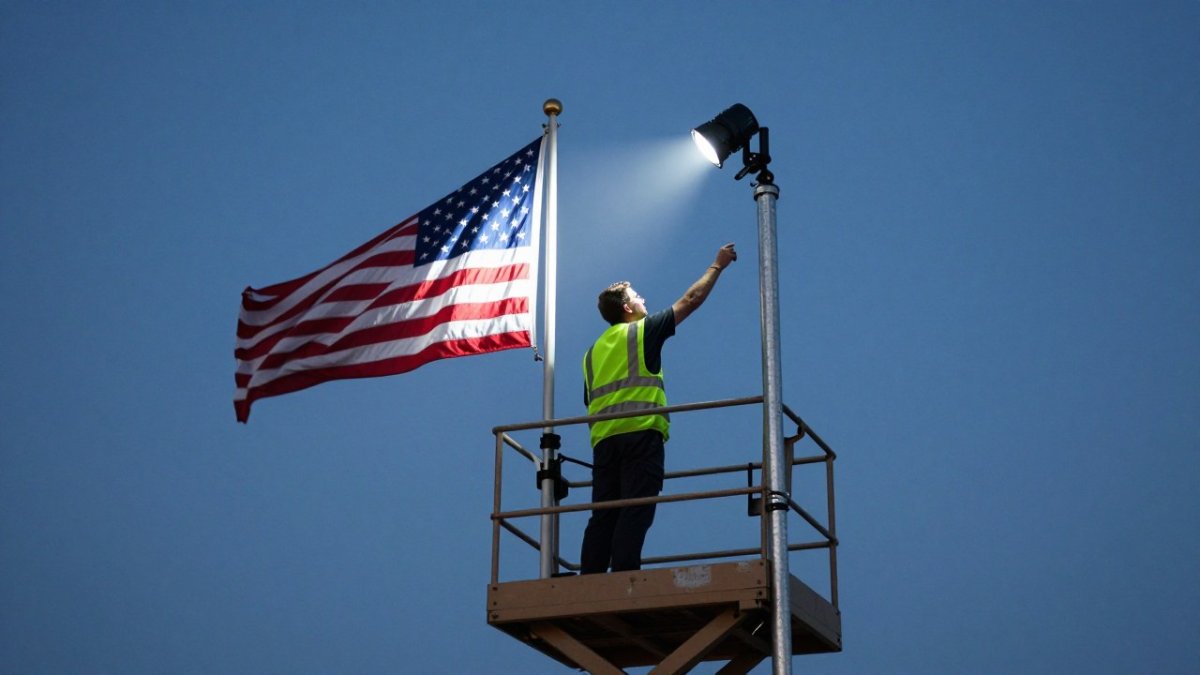
Wind will eventually test every flag you fly. The ones that survive are the ones built for it: 2-ply spun woven polyester, reinforced stitching at the fly end, and a pole sized correctly for the flag. North American Flags has been making American-made flags and installing flagpoles since 1972, with turnkey installation, custom-made corporate logo flags, and lighting to keep your display sharp day and night. Get started with North American Flags and fly a flag that's built to outlast the weather.
Comments