
7 Best Alternatives to Aluminum Flagpoles for Your Yard
Quick Summary
The best alternatives to standard aluminum flagpoles are fiberglass, steel, PVC, wood and portable telescoping poles. Fiberglass is usually the best overall upgrade for windy or coastal yards, while steel suits tall, exposed sites and portable poles suit short-term use.
Fiberglass flexes under wind and resists salt-air corrosion, per manufacturer claims.
Steel is the strongest option but is very heavy and needs a larger footing.
Portable and telescoping poles suit RV, camping and tailgating, not permanent display.
Match any published wind rating to the pole height and flag size you plan to use.
Footing depth and anchoring matter as much as material for stable installation.
Table of Contents
Why Look Beyond Standard Aluminum Flagpoles
Aluminum is the default for most flagpoles sold in the United States, and for good reason: it is light, affordable and easy to install. But it is not the right pole for every yard. Coastal homes, high-wind areas and sites with heavy use each expose its weak points. Knowing the alternatives helps you choose a pole that will still look good after years of weather.
This guide covers practical alternatives, comparing fiberglass, steel, portable and camping poles on cost, weight, wind performance and corrosion resistance. Each option has trade-offs, so the right choice depends on where the pole will stand and how you plan to use it.
Fiberglass vs. Aluminum Flagpoles: How They Compare
Fiberglass is the most common non-aluminum alternative. Tidmore Flags describes fiberglass as offering better wind and corrosion performance than aluminum, though it costs more. Tidmore Flags fiberglass vs. aluminum flagpoles guide

Not every supplier agrees on price. Flagman's buying guide says fiberglass is generally less expensive than aluminum and easier to handle because it weighs less. Custom Flag Company says the opposite, that aluminum is usually more affordable. Flagman flagpole buying guide
Zeus Flagpoles argues that fiberglass resists salt-air corrosion, which aluminum does not. That claim comes from a manufacturer comparing its own product, so treat it as a starting point. Zeus Flagpoles fiberglass vs. aluminum comparison
Quick comparison
Factor | Aluminum | Fiberglass |
Typical price | Usually lower | Varies by supplier |
Weight | Light | Light |
Corrosion resistance | Can oxidize near salt air | Resistant, per manufacturer claims |
Wind performance | Good for most yards | Often cited as stronger |
Watch out: Price comparisons depend on the specific product and supplier. Get quotes for the exact pole height and wall thickness you need before deciding.
Steel Flagpoles: Strength With a Weight Trade-Off
Steel is the strongest material on this list. Flagpole Farm describes steel poles as a good choice for a large flagpole, but it also warns that steel is very heavy. Flagpole Farm guide to choosing a flagpole for your house
Weight changes the installation. A heavy steel pole needs a deeper, wider footing and sometimes professional help to set. If you want a tall pole that can handle strong gusts, steel may justify the extra work. For a small residential yard, the weight often makes it impractical.
Flagpoles for High Winds: Which Materials Hold Up Best
Wind is the main reason homeowners move away from a standard aluminum pole, but 'high wind' is not a single condition. Gusts, sustained coastal breeze, and storm exposure stress a pole differently, and the right material depends on which one your site sees most.
How each material handles wind
Fiberglass flexes under load and returns to shape, which spreads stress along the pole instead of concentrating it at the base or a joint. That is why fiberglass is the most common recommendation for windy and coastal sites. The trade-off is that very tall fiberglass poles can feel whippy in strong gusts.
Steel resists bending because it is rigid, so it handles strong wind well, but the load transfers to the footing, which must be sized for it. A steel pole on an undersized footing can lean or fail even though the pole itself is strong.
Aluminum works in moderate wind, but thinner walls can fatigue over years of flexing, especially at threaded joints and the base plate.
PVC and portable poles are for calm conditions. They may hold a flag in a light breeze but are not built for storm exposure.
Wood handles moderate wind but is heavy and can crack or rot over time if not sealed.
What a wind rating actually means
Manufacturers publish wind ratings for a specific pole height and flag size, usually expressed as a sustained wind speed the pole is designed to survive with a flag attached. A rating for a 20-foot pole does not transfer to a 25-foot pole, and a rating with no flag is not the same as a rating with a flag flying. When comparing poles, match the rating to the height and flag size you plan to use.
Match the pole to the site
Coastal or open exposure: fiberglass is usually the best balance of flex, salt-air resistance, and low maintenance.
Tall pole on an exposed site: steel is worth the extra footing work when size and strength outweigh weight.
Sheltered residential yard: aluminum remains a reasonable budget choice.
Temporary or event use: a portable or telescoping pole is fine if you take it down before weather arrives.
Installation and safety
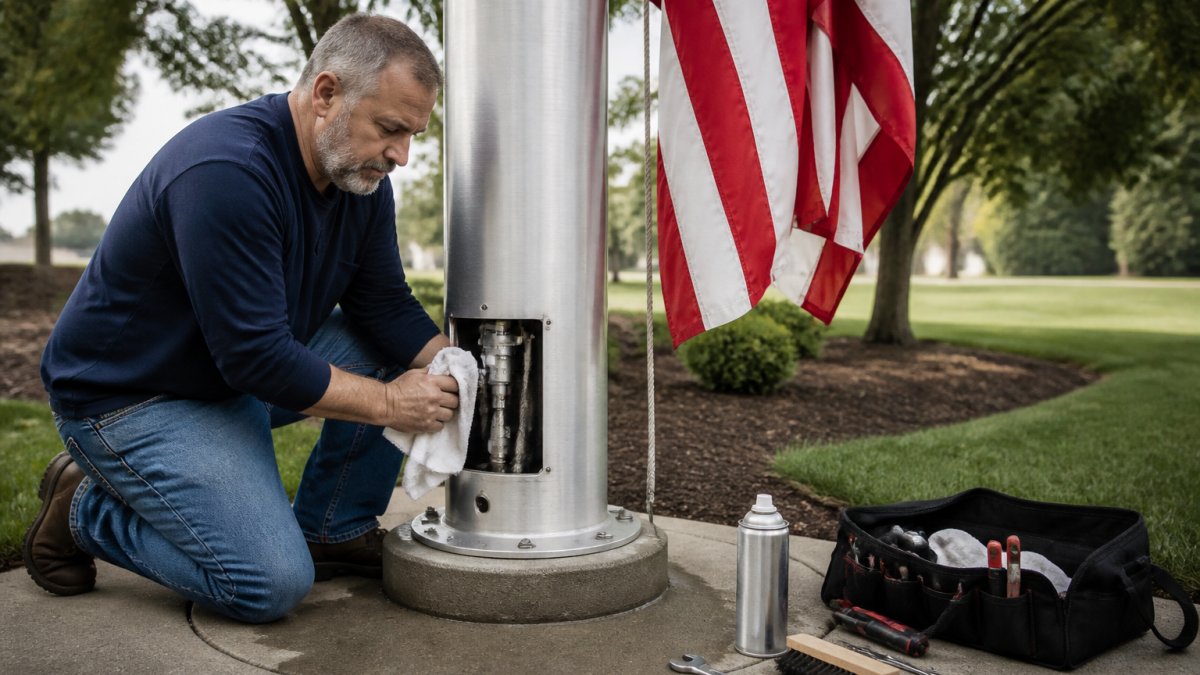
Footing depth and anchoring matter as much as material. A poorly set pole can lean or fail in wind no matter how strong the material. For tall poles, poles on exposed sites, or any installation where you are unsure of local requirements, check with your local building authority and consider professional installation. Halyard quality and the flag's own wind rating also affect how the display performs in gusts, a strong pole with a weak halyard or an oversized flag still fails.
Watch out: A pole rated for light breezes will not survive a coastal storm, and a wind rating quoted without a flag size or height is not a reliable comparison point.
Portable and Camping Alternatives: Telescoping and RV Mount Poles
Not every flagpole needs to be permanent. Telescoping poles collapse for storage and extend for use, which suits campers and tailgaters. Adventure Cove Store lists the Flagpole Pro RV Mount among its camping pole options, aimed at RV owners. Adventure Cove Store best flag poles for camping 2026
Portable poles trade height and wind stability for convenience. They are best for short-term use and calm conditions. If you need a permanent display, a fixed pole will serve you better.
Material Comparison: Cost, Weight, Wind and Corrosion at a Glance
The table below ranks the non-aluminum alternatives for a typical residential yard and maps each material to the site conditions where it makes sense.
Ranked alternatives (best to worst for most residential yards)
Fiberglass, best overall balance of wind flex, salt-air resistance, and low maintenance; the default upgrade from aluminum.
Steel, strongest and best for tall or exposed poles, but heavy enough to change footing and installation requirements.
PVC and conduit poles, cheapest and lightest, fine for temporary or low-wind display, not for permanent exposure.
Wood, traditional look, but requires sealing, checking for rot, and is heavier than fiberglass at comparable heights.
Decision matrix
Material | Relative cost | Weight | Wind handling | Corrosion resistance | Maintenance | Best-use environment |
Fiberglass | Mid to high | Light | Strong (flexes) | Strong | Low | Coastal, windy, long-term residential |
Steel | Mid to high | Heavy | Strong (rigid) | Needs coating | Moderate (inspect coating) | Tall poles, exposed sites, commercial |
Wood | Mid | Heavy | Moderate | Poor unless sealed | High (seal, inspect rot) | Traditional look, sheltered yards |
PVC / conduit | Low | Very light | Limited | Good | Low | Temporary, event, calm sites |
Portable / telescoping | Low to mid | Light | Limited | Varies | Low | RV, camping, tailgating |
How to read the matrix
Cost is relative because the same material can span a wide range by height, wall thickness, and finish. Get quotes for the exact height and wall thickness you need.
Weight drives installation more than most buyers expect. A heavy steel pole needs a deeper, wider footing and often two people or a lift to set. Fiberglass and PVC can usually be handled by one or two people at residential heights.
Wind handling is not the same as wind rating. Fiberglass flexes and returns, which spreads stress; steel resists bending but transfers load to the footing; aluminum can fatigue at thin walls; PVC and portable poles are for calm conditions only. Always check the manufacturer's published wind rating for the height you are buying.
Corrosion resistance separates coastal from inland buyers. Fiberglass and PVC resist salt air; steel needs a protective coating that must be inspected; aluminum can oxidize near salt; wood needs sealing against moisture. If the pole will stand within a few miles of salt water, weight the corrosion column heavily.
Watch out: A material that wins on one column can lose on another, a cheap PVC pole is light and corrosion-resistant but will not survive a storm, and a steel pole that handles wind may be impractical to install in a small yard.
Choosing the Best Residential Flagpole for Your Yard
Start with three questions: where the pole will stand, how tall it needs to be and who will install it. A pole near the coast favors fiberglass. A tall, exposed site may justify steel. A rental or RV needs a portable option.
Pick the flag size to match the pole height. Our guide to choosing flag size for your flagpole walks through the proportions. If you are weighing a permanent pole, review the top considerations before installing a residential flagpole first.
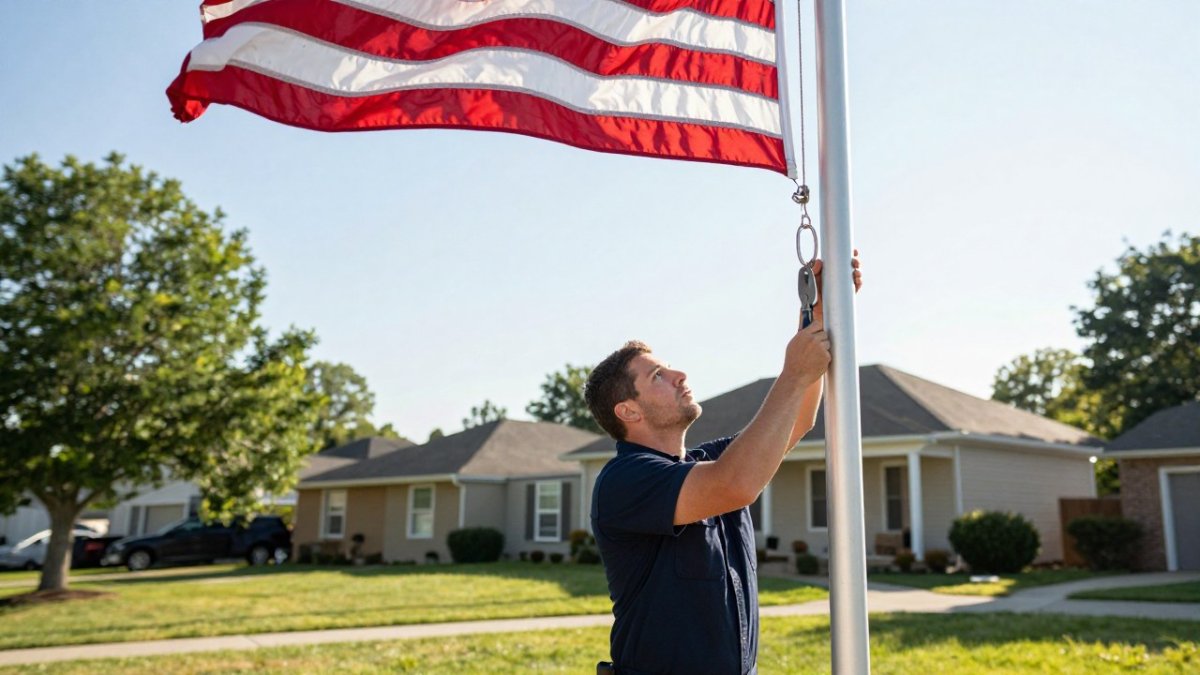
Installation matters as much as material. A poorly set pole can lean or fail in wind, no matter how strong the material. If you would rather have the job done properly, professional residential flagpole installation takes the work off your hands. Existing pole owners may also want a flag replacement service to keep the display looking sharp.
Fiberglass can offer a good balance of wind resistance and corrosion protection for a home yard, while aluminum can be a budget choice for calm sites. Browse US-made flags to see which sizes and materials suit your setup. Steel is worth considering only when size and strength outweigh weight and cost.
Frequently Asked Questions
What is the best material for a flagpole?
There is no single best material. Aluminum is lightweight and affordable, fiberglass resists corrosion and performs well in wind, and steel is very strong but heavy and needs more robust mounting. For most residential yards, fiberglass offers the best balance of wind performance and corrosion resistance, while aluminum remains a sensible budget choice for calm, inland sites. Match the material to your wind exposure, budget and installation method before you buy.
What can I use instead of a flagpole?
If you cannot install a permanent pole, options include a portable telescoping pole with a base plate, a wall- or porch-mounted bracket, or an RV or camping mount that clamps to a vehicle or railing. These work well for temporary displays, events and camping. They are generally shorter and less wind-stable than in-ground poles, so choose a model rated for your local wind conditions and secure the flag with a halyard that cannot slap against the pole.
Are fiberglass flagpoles good in high winds?
Fiberglass flagpoles are generally well suited to windy sites because the material flexes under load instead of fatiguing and cracking. Manufacturer comparisons consistently cite fiberglass as having better wind performance than aluminum. Check the pole's wind rating and the flag size you plan to fly, since a large flag increases load significantly. Fiberglass costs more than aluminum, so weigh the performance benefit against your budget and site exposure.
Are steel flagpoles stronger than aluminum?
Steel flagpoles are typically stronger than aluminum and can support taller poles and larger flags, which is why they are common for commercial and high-profile installations. The trade-off is weight, which makes steel harder to handle and requires a more substantial in-ground foundation. Steel also needs protective coating to resist rust. For a large residential or commercial pole, steel can be the right choice, but a smaller home pole usually does not need that strength.
Comments