
7 Residential Flagpole Maintenance Tips That Prevent Costly Repairs
Last Updated: November 1, 2026
Quick Summary
Residential flagpole maintenance is the routine inspection, cleaning, lubrication, and part replacement that keeps a home flagpole safe and working. Check the base, pole, truck, and halyard monthly and do a full hands-on inspection each season, lubricating the pulley once or twice a year.
A monthly visual check takes under two minutes; a full seasonal inspection takes about fifteen minutes.
Lubricate the pulley and truck once or twice a year with light silicone spray or machine oil, never thick grease.
Flagpole rope replacement takes about 20 minutes on a standard home pole and requires a helper.
Wash the pole once or twice a year with mild detergent and warm water, then rinse and air dry.
Before winter, tighten every bolt, lubricate with cold-weather-safe silicone, and lower the flag during major storms.
Table of Contents
Why Residential Flagpole Maintenance Matters More Than Most Homeowners Realize
Your Residential Flagpole Inspection Checklist for Every Season
Lubricating Moving Parts and Spotting Halyard Wear Before It Fails
Flagpole Rope Replacement: A Step-by-Step Guide for Stuck or Frayed Halyards
Flagpole Maintenance Before Winter: Storm Prep and Cold-Weather Checks
Book Professional Flagpole Service or Order Replacement Parts
Why Residential Flagpole Maintenance Matters More Than Most Homeowners Realize
A residential flagpole is a simple machine with a hard job.
Residential flagpole maintenance is the routine inspection, cleaning, lubrication, and part replacement that keeps a home flagpole safe and working.
Skip it and the costs add up fast. A frayed rope drops a flag onto the roof. A stuck hook means climbing a ladder you should not be on.
Below, we break down the seven habits that keep a home flagpole standing straight for decades. Most take under ten minutes.
Your Residential Flagpole Inspection Checklist for Every Season
A good residential flagpole inspection checklist covers three zones: the base, the pole itself, and the truck at the top. Walk the pole once a season and after any major storm. Look, listen, and touch. The difference between a pole that lasts decades and one that fails early is usually not the pole itself, it is whether anyone looked at the right parts at the right time.

What to Check at the Base, Pole, and Truck
Base: cracks in the concrete, loose bolts, water pooling, rust stains, soil settling around the footing
Pole: dents, bends, rust spots, loose sections on multi-piece poles, leaning out of plumb
Truck: a wobbling or squeaking pulley, worn snaps, a rope rubbing the pole, missing or loose fasteners
Halyard: fraying, stiffness, splinters, a rope that jumps the pulley, glazing or flattening where it rides the sheave
Flag: frayed fly end, faded colors, torn grommets, loose stitching at the heading
A Simple Seasonal Calendar
A light monthly visual check plus a hands-on seasonal inspection can catch most failures before they become expensive. Use this calendar as a starting point and adjust for your local weather.
Season | Focus | Tasks |
Spring | Post-winter recovery | Inspect for ice damage, check base for frost heave, lubricate pulley, replace worn halyard, wash pole and flag |
Summer | Peak-use check | Monthly visual check, listen for squeaks, verify snaps and clips, inspect flag for sun fade |
Fall | Winter prep | Tighten all fasteners, lubricate with cold-weather-safe silicone, trim nearby branches, decide storm policy |
Winter | Storm watch | Lower flag before ice or high wind, check for snow load, inspect after any storm |
A monthly visual check takes under two minutes: stand at the base, look up the pole, listen for squeaks when the wind moves the flag, and glance at the rope where it meets the cleat. A full hands-on inspection each season takes about fifteen minutes and covers the table above.
How Often to Inspect and When to Call a Professional
Check the pole visually every month and do a full hands-on inspection each season. Call a professional if you find a bent pole, a loose base, damage above the halfway point, or a truck that will not turn freely.
Wind is the trigger for extra checks. After any storm with gusts strong enough to damage trees, walk the pole before you raise the flag again. Look for a leaning pole, a rope that jumped the pulley, or hardware that shifted.
Watch Out Never climb a residential flagpole to inspect or repair the truck. A step ladder is only appropriate for reaching the cleat at the base. Anything above eye level calls for a professional with the right equipment.
Pro Tip Keep a simple log, date, what you checked, what you replaced. A written record makes it obvious when a halyard is aging faster than expected and helps you spot patterns like repeated fraying at the same point.
Lubricating Moving Parts and Spotting Halyard Wear Before It Fails
Most flagpole failures start at the halyard.
Lubricate the pulley and truck once or twice a year with a light silicone spray or a few drops of machine oil.
Check the halyard by running it through your hands. Feel for rough spots, thin sections, and stiffness.
Watch out: a rope that snaps in a storm drops the flag and can whip the hardware against the pole, chipping paint or cracking the truck.
Flagpole Rope Replacement: A Step-by-Step Guide for Stuck or Frayed Halyards
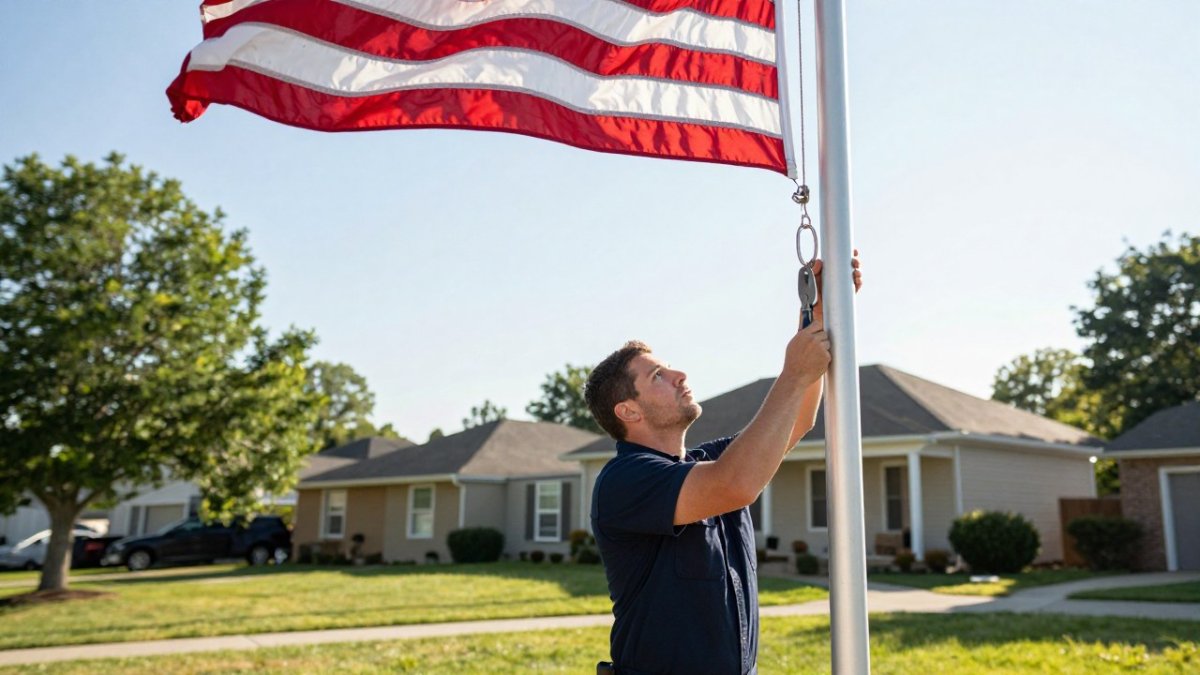
Flagpole rope replacement takes about 20 minutes on a standard home pole. You need a new halyard, a ladder rated for the height, and a helper.
Lower the flag and remove it from the snaps.
Tie the new rope to the old one with a tight knot, or tape the ends together.
Pull the old rope through the pulley to feed the new rope into place.
Untie the old rope and secure the new halyard to the cleat.
Attach the snaps and rehang the flag.
If the rope is jammed and will not move, do not force it. A jammed pulley usually means a worn sheave or a rope that jumped the groove.
If the job is beyond you, our flag replacement service handles the lowering, swapping, and rehanging so the pole is ready without a ladder climb.
Troubleshooting a Stuck Hook or Jammed Pulley
A stuck hook is usually a rope that jumped the pulley groove or a snap caught on the truck. Lower the flag if you can. If the hook will not budge, do not yank it.
Try a gentle up-and-down wiggle on the halyard first. If that fails, stop and get help. Reaching the top of a residential flagpole safely requires the right equipment, and a stuck hook is not worth a fall.
How to Clean a Flagpole and Care for the Flag Itself
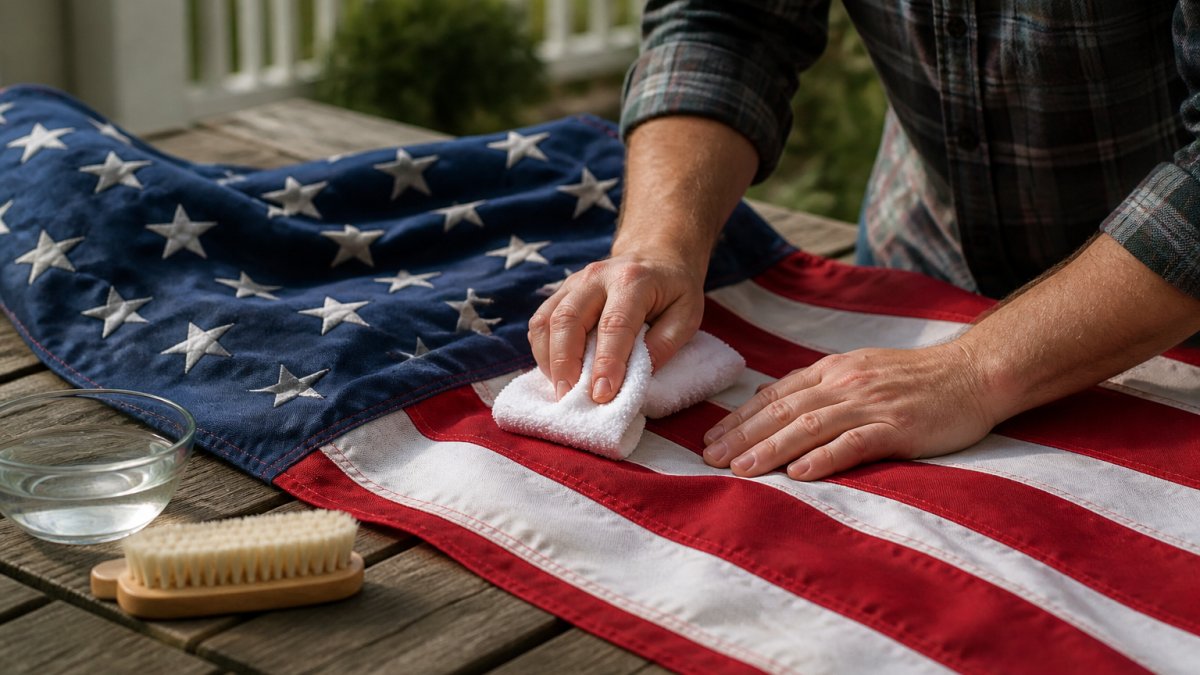
Learning how to clean a flagpole is easier than most people expect. Wash the pole once or twice a year with mild detergent and warm water, then rinse and let it air dry.
Clean the flag the same way. Use mild detergent and cold water, never bleach. Hand wash, rinse well, and air dry flat. Do not put a flag in the dryer.
Store flags folded and dry when they come down for the season. A wet flag left folded grows mildew.
When a flag is faded or torn past saving, replace it. Our US flags are made in the USA, and our Endura-Nylon U.S. Flag is built for weather: aniline-dyed 200-denier nylon that dries fast, resists fading, and flies in the slightest breeze.
Flagpole Maintenance Before Winter: Storm Prep and Cold-Weather Checks
Flagpole maintenance before winter comes down to three jobs: tighten, lubricate, and plan for wind. Cold weather makes rope stiff and brittle. Ice in the pulley seizes the truck. A little prep in fall saves a repair in January.
Tighten every bolt at the base and on the truck
Lubricate the pulley with a cold-weather-safe silicone spray
Inspect the halyard for stiffness and replace it if worn
Trim nearby branches that could whip the pole in wind
Decide now whether to lower the flag during major storms
Wind Thresholds and Storm Preparation
When a storm is coming:
Lower the flag and remove it from the snaps.
Secure the halyard to the cleat so it does not slap the pole.
Check that the truck and pulley are free of debris.
If the pole is already leaning or the base is cracked, do not wait for the storm, have it inspected.
Watch Out Ice and snow load on a flag can bend a pole or snap a halyard. During a forecast of heavy ice or high wind, lower the flag and secure the halyard to the cleat. That one habit prevents most winter damage.
Post-Storm Inspection Steps
After the storm passes, walk the pole before you raise the flag again:
Look for a leaning pole or a base that has shifted
Check the halyard for new fraying or a rope that jumped the pulley
Listen for a squeak or grind when you turn the pulley by hand
Inspect the flag for tears, especially at the fly end and grommets
Clear any ice or debris from the truck and cleat
If the pole is leaning, the base is cracked, or the truck will not turn, stop and call a professional. Raising the flag on a compromised pole invites a bigger repair.
Key Takeaway Winter prep is mostly about wind and ice. Lower the flag before the storm, secure the halyard, and inspect afterward. That routine prevents the most common cold-weather failures.
Repair or Replace? A Homeowner's Decision Guide
Use this simple rule: repair the parts, replace the pole only when the structure itself fails. Most flagpole problems are rope, hardware, or finish issues. Those are cheap fixes. A bent or rusted-through pole is a different story.
Problem | Fix | DIY or Pro |
Frayed halyard | Replace rope | DIY |
Worn snaps or clips | Swap hardware | DIY |
Squeaky pulley | Lubricate | DIY |
Stuck hook | Free or replace truck | Pro if stuck |
Rust spots on pole | Sand and touch-up paint | DIY |
Bent pole | Straighten or reset base | Pro |
Cracked base | Reset pole in new concrete | Pro |
Pole rusted through | Replace pole | Pro |
Repair makes sense when the pole is sound and only parts are worn. Replace when the pole is bent, cracked, or rusted through, or when the base has failed. For anything above eye level, call a professional. The risk is not worth the savings.
Book Professional Flagpole Service or Order Replacement Parts
A residential flagpole rewards a little attention. Check it each season, lubricate the moving parts, replace the rope before it fails, and clean both pole and flag.
If a job calls for a ladder, a lift, or resetting a pole in concrete, hand it to a pro. North American Flags has served homeowners and businesses since 1972 with American-made flags, turnkey flagpole installation, and maintenance service.
For more flag care and installation advice, read our blog for expert updates on American traditions.
Frequently Asked Questions
How often should you inspect a residential flagpole?
Walk out and check your flagpole once a month during normal weather, and again after any strong storm. A full inspection each spring and fall catches halyard fraying, loose cleats, and corrosion before they turn into repairs. Pay extra attention to the truck and pulley at the top, since that hardware takes the most wear and is hardest to see from the ground.
When should you replace a flagpole rope or halyard?
Replace the halyard when you see fraying, thinning, or a fuzzy surface, or when the rope has gone stiff and rough from sun exposure. A rope that has snapped or slipped off the pulley needs replacement too. Keep a spare rope on hand so a snapped halyard does not leave your flag stuck at half-staff.
How do you stop a flagpole from making noise in the wind?
Most flagpole noise comes from the snap hooks clanking against the pole or a loose halyard slapping in the wind. Check that the snaps are the right size for your rope and that the halyard is snug on the cleat. Worn pulleys and loose truck fittings also rattle. If the noise persists, a professional inspection can confirm whether the truck or pulley needs replacement.
How do you prepare a residential flagpole for winter?
Lower and store the flag before the first hard freeze, inspect the halyard for stiffness and fraying, and tighten every cleat and fastener. Clear dirt and standing water from around the base so ice does not heave the concrete. If your area sees heavy snow or ice, have the pole checked for corrosion and loose fittings in fall so winter weather does not turn a small issue into a bent pole.
Your flagpole should stand proud, not lean or fail. Get started with North American Flags and keep your display flying with American-made quality and professional service that lasts.
Comments