
Preventing Flag Tangling on Spinning Poles: A Practical Guide
Quick Summary
Flag tangling happens when steady wind spins a rotating pole so the fabric winds around the shaft. You can prevent it by freeing or replacing a stiff swivel, matching the flag size to the pole height, and moving the pole away from nearby walls, fences and trees.
Rotating poles are the ones that wrap, while fixed poles usually stay clean.
A stiff or rusted swivel is the most common single cause of wrapping.
Attach a swivel at the top grommet so the flag can rotate freely.
Make one change at a time, then check the flag after a full day of wind.
Choose heavier nylon over thin polyester for windy locations.
Table of Contents
Why Flags Wrap Around Spinning Poles
Flags wrap around spinning poles because wind keeps the flag turning on the pole in one direction, and the fabric winds itself around the shaft, which is the core cause of flag tangling.
The flag's own weight, its size and the stiffness of its fabric all play a part. Once a flag starts to wrap, each turn makes the next one more likely.
How wind direction and pole placement cause wrapping
Wind direction decides which way the flag spins. A breeze that blows mostly from one direction keeps the flag turning the same way, so it winds up quickly.
Pole placement matters just as much. A pole near a building, fence or tree creates eddies and swirling air. Those uneven currents twist the flag at odd angles and speed up wrapping.
Diagnose Your Setup Before Buying Anything
Before you buy hardware, check what you already have. A guide on how to set flagpole hole depth and width correctly helps you confirm the installation itself is sound.
Start with these checks:
Pole type: Is it a fixed or a rotating pole? Rotating poles are the ones that wrap. Our guide to sectional vs telescoping flagpoles explains which pole type suits your wind conditions.
Flag size: Is the flag too big or too small for the pole height and wind conditions?
Hardware: Are the snap hooks or swivels worn, rusted or stiff?
If the swivel is stuck or the hook is bent, fix that first. A working swivel alone can solve much of the wrapping.
Before buying hardware, check these common setup factors that drive most tangling problems.
Check | What to look for | Why it matters |
Pole type | Fixed or rotating | Rotating poles are the ones that wrap |
Flag size | Too big or too small for pole height and wind | Size mismatch causes early wrapping |
Hardware | Worn, rusted or stiff snap hooks or swivels | A stuck swivel is a common cause |
Placement | Near a building, fence or tree | Nearby structures create swirling air |
Wind exposure | Steady direction or frequent shifts | Steady wind keeps the flag turning one way |
Spinning Flag Fasteners and Anti-Wrap Hardware
Spinning fasteners let the flag rotate around the halyard instead of twisting the fabric, which is one of the most reliable ways to prevent flag tangling. The flag turns freely at the attachment point, which stops the fabric from winding up the pole. The difference between a setup that works and one that still tangles usually comes down to three things: matching the hardware to the flag's attachment style, installing it at the right height, and checking it after the first wind event.
$7 DIY Stop Flag From Wrapping Around Pole Tangling In High Wind 3/4" Washer Over 1/2" EMT OldGuyDIY
OldGuyDIY
Match the hardware to your flag's attachment style
Before you buy anything, identify how the flag attaches to the pole. There are two common styles, and they need different hardware:
Grommet attachment: The flag has metal grommets (reinforced holes) at the header and fly end. These need snap hooks or swivels sized to the grommet's inside diameter. A hook that is too large will slip out; one that is too small can bend or tear the grommet under load.
Sleeve attachment: The flag has a fabric sleeve that slides over the pole.
Measure the grommet's inside diameter with a ruler or caliper before ordering. Our heavy-duty flags for high wind guide shows which flags hold up in strong gusts. Grommet sizes vary between flags, so check the size before ordering hardware. If you are unsure, order hardware that lists its rated grommet size and compare it to your measurement.
Install and adjust the hardware correctly
Installation mistakes cause most of the tangling that hardware is supposed to prevent. Work through these steps:
Attach the top swivel first. Clip the swivel to the top grommet, then attach the swivel's other end to the halyard. The swivel should sit above the flag's header so the flag hangs below it, not beside it.
Set the bottom attachment. Use a second swivel or a plain snap hook at the bottom grommet. A bottom swivel lets the flag rotate at both ends, which reduces twist along the fly. A fixed bottom hook is acceptable but will wrap sooner in shifting wind.
Check spacing. The flag should hang with its full height exposed and no fabric bunched at either attachment. If the top and bottom attachments pull the header tight, the flag cannot rotate freely.
Test rotation by hand. With the flag lowered, spin the swivel by hand. It should turn smoothly with light pressure. If it binds, the swivel is defective or the wrong size.
Raise and observe. Run the flag for a full day, then lower it and look for twist marks or creases near the grommets. Creases at the top grommet usually mean the swivel is binding; creases at the bottom mean the bottom attachment is too tight.
Watch out: A swivel that is too large for the grommet can slip off in a gust, dropping the flag. Confirm the hook's gate closes fully around the grommet before raising the flag.
Understand the trade-offs before you buy
Anti-wrap hardware is not one product but a family of solutions, and each has compatibility, cost, durability, and installation trade-offs:
Swivel snap hooks: Inexpensive and easy to install, but they wear at the pivot and need seasonal inspection. Best for grommet flags on fixed or rotating poles.
Rotating rings: Smooth rotation and low friction, but they add height at the top attachment and may not fit short poles. Best for larger flags that need free rotation.
Anti-wrap sleeves: Keep the flag's header from rolling tight, but they add weight at the top and can change how the flag flies. Best for sleeve-attachment flags.
Try one change at a time. If you add a swivel and a weight in the same week, you will not know which one fixed the problem, or which one caused a new one.
Flag Weights to Keep Flag from Wrapping Around Pole
Weights hang from the bottom of the flag and pull it straight down. A weighted flag hangs more evenly and tends to wrap less, especially in light and variable wind.
Common options include:
Bottom weights: Small metal or plastic weights sewn into the hem.
Magnetic weights: Clip-on pieces that hold the flag straight.
Straightener rods: Thin rods that keep the flag extended.
There is a catch. In steady, strong wind, a heavy weight can make the flag drag and twist harder. Weights can also make tangling worse if they are too heavy for the flag's size.
How to Stop a Flag from Wrapping Around the Pole DIY
You can reduce wrapping with simple adjustments before buying anything new. The key is to work in a sequence, diagnose first, adjust second, and verify after each change, so you know which fix actually worked. This section turns the broad recommendations above into a practical checklist you can run in an afternoon.
Step 1: Diagnose before you adjust
Lower the flag and inspect the full setup. Note these five things:
Pole type: Fixed or rotating? Rotating poles wrap; fixed poles usually do not unless the flag is oversized or the wind is turbulent.
Attachment style: Grommet or sleeve? This determines which hardware can help.
Swivel condition: Spin each swivel by hand. It should turn with light pressure. A stiff, gritty, or rusted swivel is the most common single cause of wrapping.
Write down what you find. If the swivel is stiff or the flag is oversized, fix that first, it may solve the problem without any other change.
Step 2: Make one adjustment at a time
Work through these adjustments in order, testing after each one:
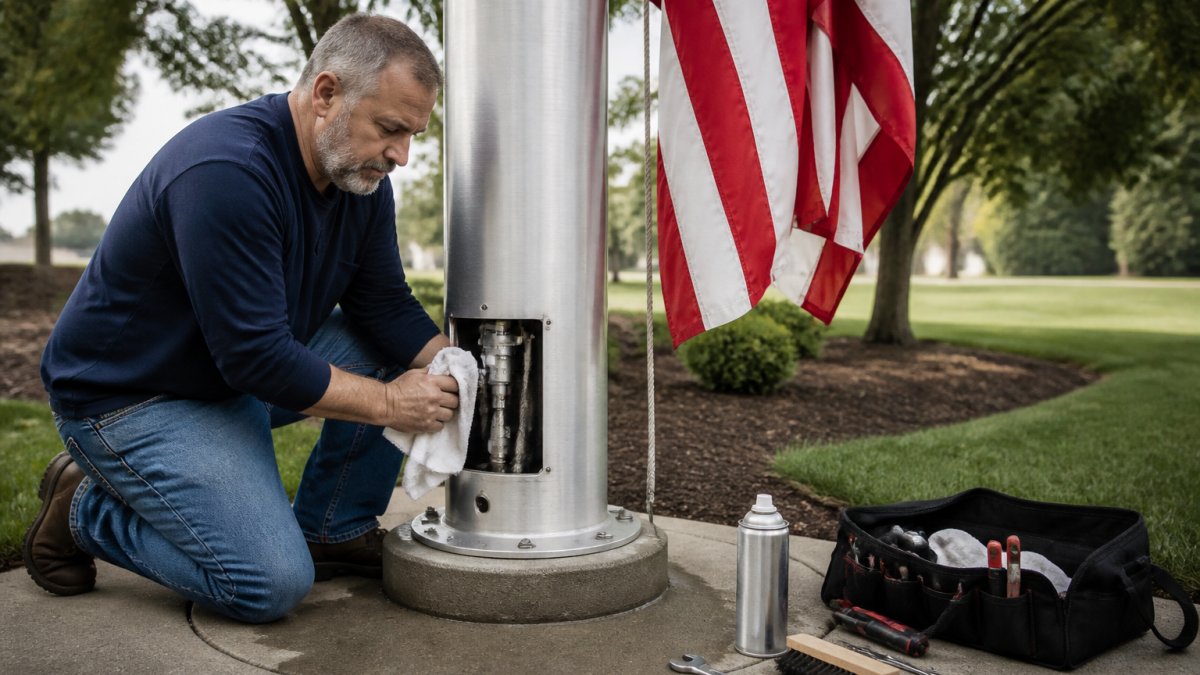
Free the swivel. Remove the top fastener, rinse out dirt and salt, and apply a drop of silicone lubricant. Do not use oil, which attracts grit and stiffens over time. Reinstall and spin by hand to confirm free rotation.
Loosen the halyard tension. The flag should hang freely without slapping the pole. Overtight halyards pull the header straight and prevent rotation.
Check attachment spacing. The top and bottom attachments should hold the flag's full height without bunching fabric. If the header is pulled tight, the flag cannot rotate.
Right-size the flag. Compare the flag's dimensions to the pole height and the manufacturer's recommended size. An oversized flag is the second most common cause of wrapping after a stiff swivel.
Reposition the pole if possible. Moving the pole a few feet away from a wall, fence, or tree can reduce turbulence enough to stop routine wrapping.
Watch out: Do not add a weight and a new swivel in the same week. If the flag still wraps, you will not know which change to undo.
Step 3: Verify and troubleshoot
Run the flag for a full day, then lower it and inspect:
Creases at the top grommet: The top swivel is binding or the wrong size.
Creases at the bottom grommet: The bottom attachment is too tight or fixed when it should swivel.
Twist along the fly: The flag is oversized or the wind is turbulent from nearby structures.
Expected result: the flag should hang straight in light wind and unwind on its own when the breeze shifts. If it still wraps every day after these steps, the hardware or the pole height is likely the cause, and a rotating pole or a different attachment style may be the next step.
Maintenance checks that prevent repeat tangling
Wrapping often returns because hardware wears out quietly. Build these checks into your routine:
Inspect swivels each season. Look for rust, grit, and a stiff pivot. Replace swivels that no longer spin freely by hand.
Check fasteners after storms. Snap hooks can bend or open in high wind. Confirm the gate closes fully around the grommet.
Look for corrosion at the grommets. Rust stains or frayed fabric around a grommet mean the hardware is wearing the flag and should be resized or replaced.
These checks take a few minutes and prevent most of the repeat tangling that sends people back to the store for new hardware.
How to Keep a Flag from Wrapping Around a Pole in Wind
Strong wind brings the most wrapping, so plan for it. Start by confirming that the flag's weight and size suit the local conditions.

Follow this approach during windy periods:
Choose heavier material. Thicker nylon handles wind better than thin polyester.
Keep the swivel clean and free. Check it after storms.
Take the flag down in severe weather. This prevents tears and tangles.
When wrapping continues in wind, look for these common causes:
Stuck swivel: The flag cannot rotate, so the fabric winds up.
Flag too heavy for the wind: It drags and twists instead of flying.
Flag too light: It spins and wraps with every gust.
Pole too close to obstructions: Turbulent air forces the flag to twist.
Fix the cause you find first. Small changes often solve the problem without new purchases.
Booking Your Next Flag Setup or Replacement
If you want a setup that is correctly matched to your pole and wind conditions, book a professional flagpole installation through North American Flags. You can also see which anti-wrap fasteners and wind-resistant flags suit your pole.
Frequently Asked Questions
Does a spinning flagpole prevent tangling?
A spinning flagpole helps but does not solve tangling alone. Tangling still happens when the flag is too light, the hardware is incompatible with the sleeve, or the pole sits in turbulent airflow near a building or tree line. Pair a rotating pole with anti-wrap hardware and a correctly sized flag for the best results.
Do flag weights keep a flag from tangling?
Flag weights can reduce tangling by adding mass to the lower edge, which helps the flag hang straight and stay open. However, weights added to the wrong place or on a flag that is already heavy can make wrapping worse by slowing rotation.
What hardware helps keep a flag from wrapping around a pole?
Choose hardware that matches your grommets or sleeve diameter, since mismatched sizes are a frequent cause of failure.
Comments