
How to Wash and Maintain Custom Logo Flags Safely
Last Updated: November 28, 2026
Quick Summary
To wash custom logo flags safely, read the care label first, then hand wash in cool water with mild soap, rinse, press out water gently, and air-dry away from heat. This protects both the fabric and the printed custom logo flags design from cracking or fading.
Always check the care label before any water touches the flag, since it overrides general advice.
Use cool or cold water and a small amount of mild liquid detergent, never hot water or bleach.
Soak the flag for about 5 minutes and swish gently rather than scrubbing the print.
Press out water gently and never wring or twist the fabric.
Air-dry completely in shade or flat before folding, and never use a clothes dryer.
Table of Contents
Why Custom Logo Flags Need Different Care
A custom logo flag is not like a standard American flag. The printed logo sits on the fabric's surface, and the wrong cleaning method can crack, fade or lift that design. Careless handling is one of the most common ways custom flags get damaged. For broader upkeep, see these residential flagpole maintenance tips.
Most people treat every flag the same way. That's the first mistake. A plain nylon flag can handle a rougher wash than a flag with a detailed full-color print. The print is what makes the flag yours, and it's usually what gets damaged first.
Here's the short version: gentle handling, cool water and air-drying protect both the fabric and the logo. Everything else in this guide builds on that idea.
Choosing Spot Cleaning, Hand Washing or Machine Washing
Advice on this point varies, so use a decision sequence rather than a single rule. Work from the least aggressive method that will actually solve the problem, and let three inputs drive the choice: how soiled the flag is, what it is made of, and what the care label says.
Step 1: Read the care label first
Before any water touches the flag, find the care label or the manufacturer's printed instructions. They override every general recommendation in this guide. If the label says hand wash only, do not machine wash, even on a gentle cycle. If it says do not wash, spot clean only. If there is no label, default to the most conservative method that will work.
Step 2: Match the method to the soil level
Light dust, a single mark, or a fresh smudge: Spot clean. A damp white cloth with a few drops of mild soap handles most of these in under five minutes.
Evenly soiled across the field, or a season's worth of outdoor exposure: Hand wash. This is the workhorse method for custom logo flags and the safest full-clean option for printed designs.
Heavily soiled with caked dirt or multiple stains: Hand wash, but pre-treat the worst spots first using the stain steps below. Do not jump to machine washing just because the flag is very dirty.
Machine washing: Only when the care label explicitly permits it. Many printed flags are not machine-safe, and a single cycle can crack or lift a logo that would have survived years of hand washing.
Step 3: Factor in fabric and print method
Polyester and nylon are the most common flag fabrics and both tolerate cool hand washing well, but they behave differently. Nylon dries faster and is more prone to holding wrinkles if wrung; polyester is more dimensionally stable but can pill if scrubbed. Screen-printed logos generally tolerate light dabbing better than digitally printed logos, where dye-based inks sit closer to the fibers and can wick or blur if the area is over-wetted. When in doubt, treat the flag as digitally printed and stay gentle.
Step 4: When the label and the soil level disagree
If the label permits machine washing but the flag is only lightly dusty, spot clean anyway, there is no benefit to a full wash. If the label says hand wash only but the flag is heavily soiled, hand wash with a pre-treat step rather than risking the machine. The label sets the ceiling; the soil level sets the floor.
Watch out: Do not assume a 'gentle' or 'delicate' machine cycle is safe for a printed flag. Agitation, not heat, is often what cracks a logo, and a delicate cycle still tumbles the fabric.
Once you have chosen a method, move to the step-by-step wash instructions below.
Step-by-Step: How to Wash a Custom Logo Flag
Follow these steps for a hand wash. They take about 20 to 30 minutes, plus drying time.

Check the label. Confirm the fabric and printing method allow washing.
Fill a clean sink or tub with cool water. Use cool or cold water, not hot.
Add a small amount of mild soap. A few drops of mild liquid detergent is enough.
Submerge the flag gently. Let it soak for about 5 minutes. Don't scrub.
Swish it slowly. Move the water through the fabric with your hands.
Rinse thoroughly. Run clean cool water through it until no soap remains.
Press out the water. Squeeze gently. Never wring or twist the flag.
Air-dry the flag. Hang it or lay it flat, away from direct heat.
Using Cold Water and Mild Soap
Cold or cool water protects the dye and the print. Hot water makes colors bleed and can cause shrinkage. Mild soap cleans without stripping the color.
Skip heavy-duty detergents and anything with brighteners. They can leave a dull film on the logo. Keep the soap amount small, since leftover soap attracts dirt.
Why Bleach and Harsh Chemicals Cause Damage
Bleach breaks down the dye and can leave white or faded patches on the fabric. Strong degreasers and solvents can lift the printed logo right off the surface.
If a flag needs more than mild soap and water, the answer is almost never a stronger chemical. Try a longer soak in cool water first.
The wash steps below break down into a quick reference for each stage of a hand wash.
Step | What to do | Time |
Check the label | Confirm the fabric and printing method allow washing | Before washing |
Fill with water | Use a clean sink or tub of cool or cold water | Before soaking |
Add soap | A few drops of mild liquid detergent | Before soaking |
Soak | Submerge gently and let it sit without scrubbing | About 5 minutes |
Swish | Move water through the fabric slowly by hand | During soak |
Rinse | Run clean cool water until no soap remains | Until clear |
Press out water | Squeeze gently, never wring or twist | Before drying |
Air-dry | Hang or lay flat, away from direct heat | Until fully dry |
How to Remove Stains from a Flag Without Damaging the Print
Outdoor flags pick up mud, bird droppings, grease, tree sap and mildew. The stain itself is rarely what ruins a custom logo flag, hurried scrubbing and the wrong agent are. Work through the stain in stages, from gentlest to strongest, and stop as soon as the mark lifts.
Garden & Lawn
First, identify the stain and the print type
Before you touch the spot, check two things: what the stain is, and how the logo was printed. Screen-printed logos sit as a thicker ink layer on the fabric and tolerate light dabbing better than digital prints, where dye-based inks sit closer to the fibers and can wick if you over-wet the area. If you are unsure which method produced your logo, treat the flag as digitally printed and stay conservative.
Always test any cleaning solution on a hidden corner, a hem, the sleeve, or the back of a grommet tab, and let it dry before proceeding. A reaction can take a few minutes to show.
Stain-by-stain treatment
Mud and dirt. Let the mud dry completely, then brush off the loose soil with a soft-bristle brush. Do not rub wet mud into the weave, it pushes particles deeper.
Bird droppings. These are acidic and can etch dye if left. Soften the deposit with a damp cloth for a few minutes, lift it away rather than wiping sideways, then rinse the area with cool water. Avoid hot water, which can set the protein in the droppings.
Grease and oil. Apply a small amount of mild detergent directly to the spot and let it sit for 5 to 10 minutes before dabbing. Do not use solvent-based degreasers, they can lift the printed logo. Rinse thoroughly so no soap residue remains.
Tree sap. Harden the sap with a cold pack or ice wrapped in a cloth, then chip it off gently with a plastic edge. Avoid scraping with metal, which can abrade the print. Follow with a mild-soap spot clean.
Mildew. Mildew is the hardest case on a printed flag. Treat it as soon as you see the telltale musty smell or gray-black speckling. Mix a small amount of mild soap in cool water, dab the area, and rinse well.
Watch out: Never combine bleach with other cleaners, and never apply bleach directly to a printed logo, it will strip the color and can leave a permanent pale patch on the fabric.
Rinse, dry and inspect
After any spot treatment, rinse the area with cool water until no soap remains, then blot with a clean towel and air-dry fully before folding. Leftover detergent attracts dirt and can leave a dull film over the logo. Once dry, inspect the treated area under good light, if the print looks lifted or cracked, stop treating and consider whether the flag is still serviceable for display.
How to Prevent Flags from Fading Outdoors
Sun and weather fade colors over time, and the logo fades along with the field. Careful habits slow this down.
Take the flag down during severe storms and high winds.
Rotate the flag occasionally so the sun hits it evenly.
Choose a sturdy, weather-resistant material for outdoor use. A durable Poly-Max flag is built for long outdoor display. Learn more about how to make American-made flags last longer in sun and weather.
Wash the flag on a regular schedule, so dirt doesn't sit and break down the fabric.
Drying, Folding and How to Store Flags Between Uses
Air-drying is the safest choice. Hang the flag in shade or lay it flat on a clean towel. Make sure it's completely dry before you fold it, since trapped moisture leads to mildew.
Never use a clothes dryer. The heat can shrink the fabric and crack the print.
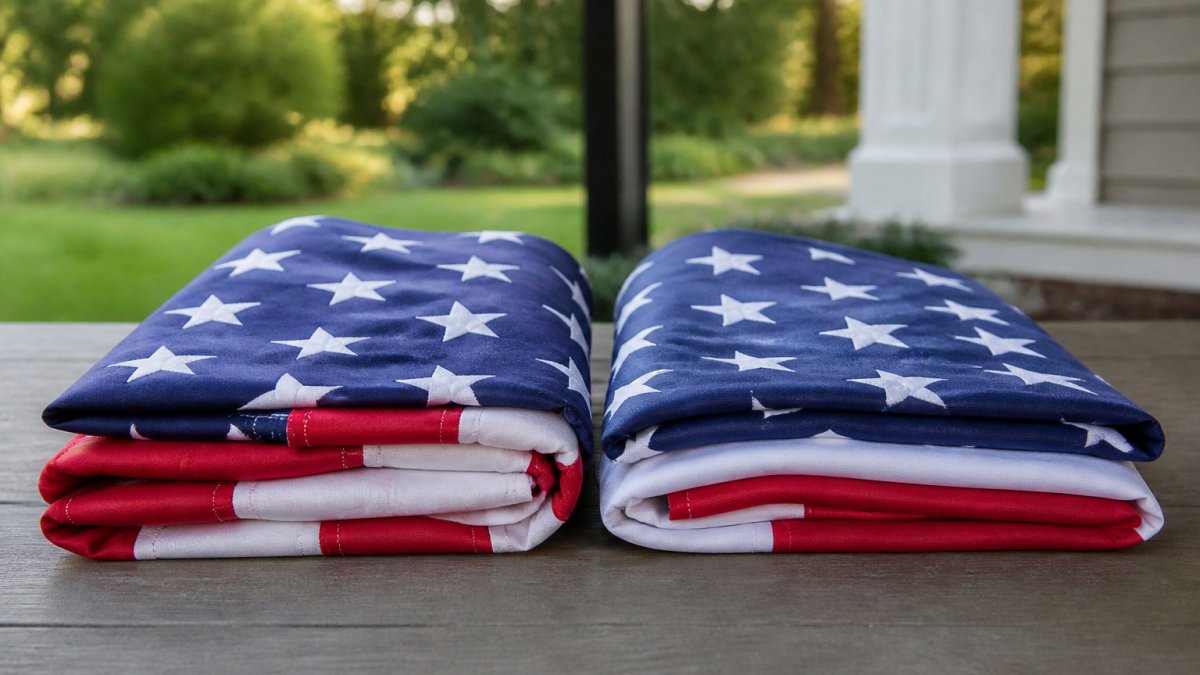
When you store a flag, keep it clean, dry and out of direct sun. Fold it gently along its existing creases. Store it in a breathable bag or box, not a sealed plastic container, which can trap moisture.
Do's and Don'ts for fabric preservation:
Do wash in cool water with mild soap.
Do air-dry completely before folding.
Do store in a dry, breathable spot.
Don't use bleach or harsh chemicals.
Don't put the flag in a hot dryer.
Don't wring or twist the fabric.
Don't fold or store a damp flag.
Your Next Step: Schedule Care or Replace a Worn Flag
If your custom flag is faded, frayed or stained beyond cleaning, it may be time for a replacement. Request a quote for a new custom flag from Shop Custom Flags, or browse our US flag options if you need a standard replacement.
Frequently Asked Questions
Are flags machine washable?
Most custom logo flags can be hand washed, but machine washing is risky. The agitation and spin cycle can stretch the fabric, fray hems and crack printed logos, especially on heavier polyester or nylon flags. If you must use a machine, choose the gentlest cycle, cold water and mild detergent, place the flag in a mesh bag, and skip the dryer.
How do you keep outdoor flags from fading?
Fading comes mainly from sun exposure, so rotate the flag periodically if your flagpole setup allows it and take it down during severe weather. Wash with cool water and mild soap rather than hot water or bleach, since harsh chemicals break down ink and dye. Air-dry the flag completely in the shade, and store it out of direct light when not flying. Following these habits helps custom logo prints keep their color far longer.
What is the safest way to remove stains from a printed flag?
Start with the gentlest method. Rinse the stain with cool water as soon as possible, then dab, do not scrub, with a damp cloth and a drop of mild soap. Test the cleaner on a hidden edge first. Avoid bleach, chlorine and abrasive brushes, which can lift the printed logo. For mildew or stubborn outdoor stains, soak the flag briefly in cool water with mild soap, rinse thoroughly, and air-dry out of direct sun. If the print is still damaged after cleaning, the flag may need replacement.
Comments